04 · Systems discovery · 2025
Tracing identity failures through legacy data infrastructure.
For Indiana University's Hacking for Defense program, our five-person team investigated how fragmented personnel systems slow mission-data reconciliation. I focused on technical and stakeholder research, then shaped and prototyped a human-centered identity-layer proposal.
Open synthetic UID prototype ↗
- Role
- Data strategy + technical research
- Team
- 5 graduate researchers
- Evidence
- 60+ team interviews
- Output
- Interactive synthetic-data prototype

Problem
Same person, different identity in every system.
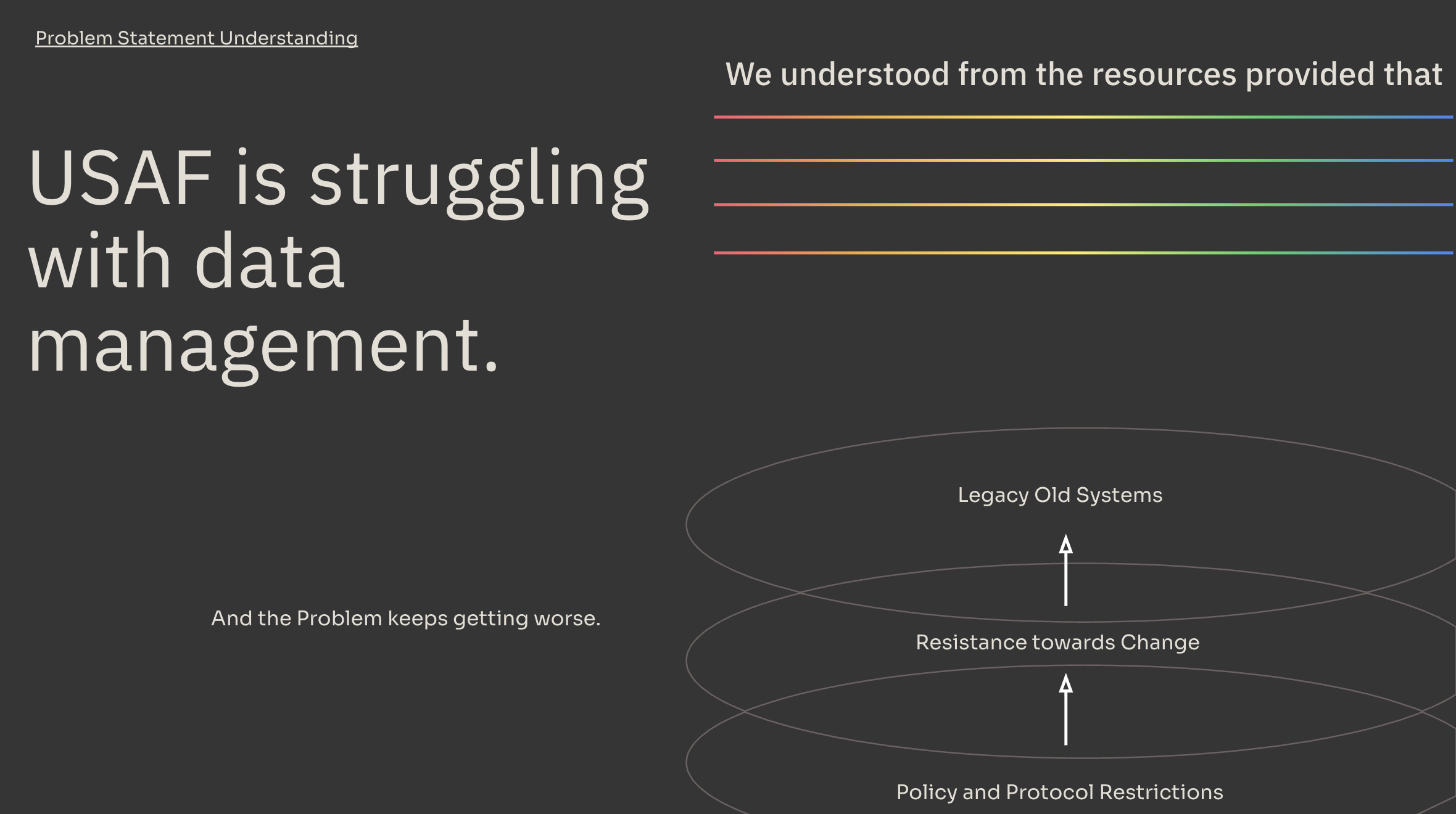
Personnel, health, training, logistics, and readiness tools were built at different times under different rules. Operators reconciled records manually and maintained shadow spreadsheets because official systems could not reliably connect identity across domains.
Research question: Can a shared identity layer improve discovery and reconciliation without replacing every source system?
Discovery
Move across ranks, vendors, and technical boundaries.
Team conducted 60+ interviews across military, government, industry, and academia. My contribution covered roughly 40 stakeholder conversations and technical synthesis, including architecture constraints, identity standards, access controls, procurement realities, and operator workarounds.
We mapped needs at three levels: individual record continuity, operator workflow, and enterprise interoperability. Repeated pain centered on reconciliation time, missing context, and distrust of official records.
Proposal
Link records before replacing systems.
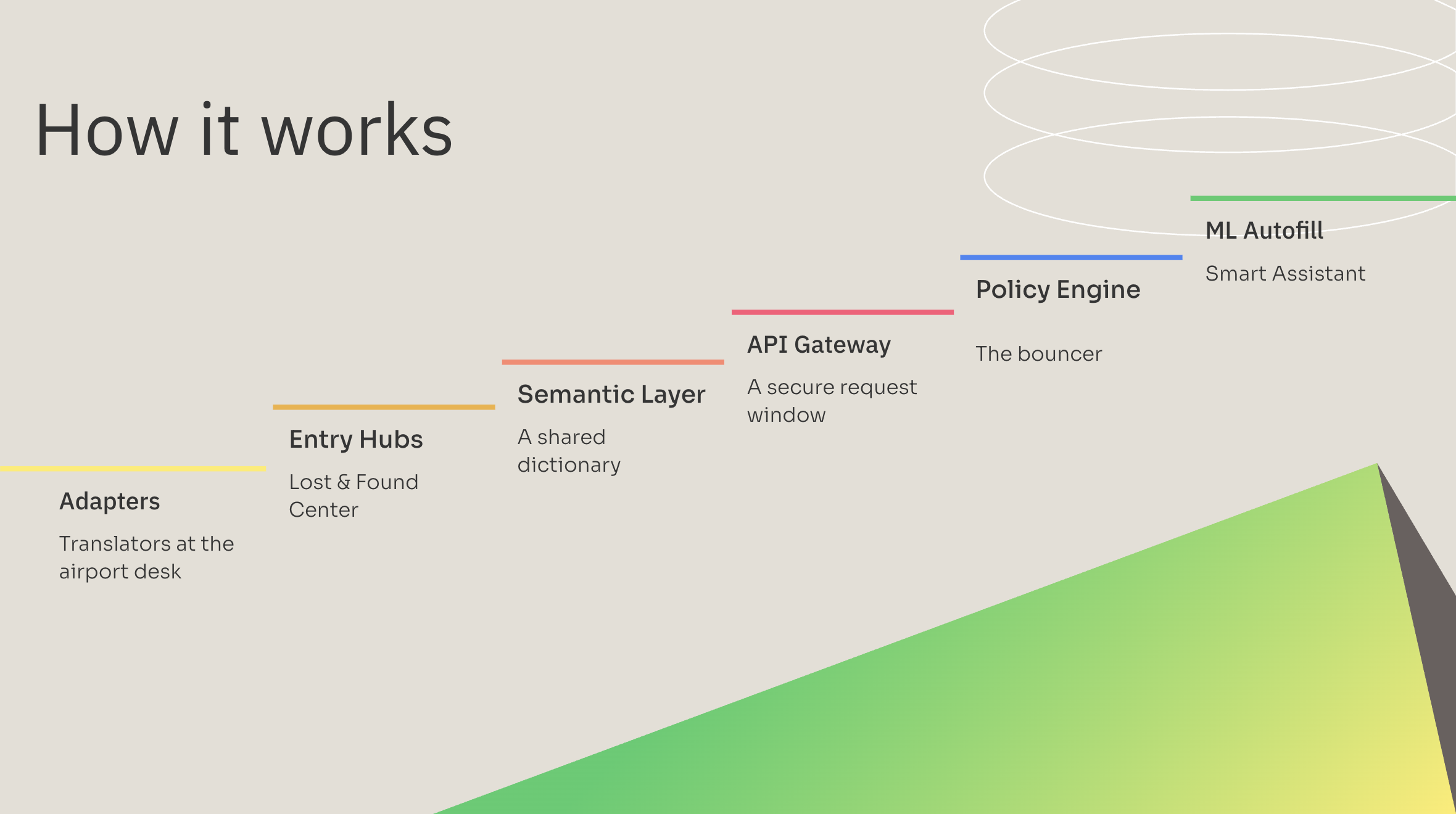
Proposed framework used a common identity tag and governed resolution layer to connect authorized records across existing systems. Phased architecture separated identity, permissions, discovery, reconciliation, and audit concerns.
Interactive prototype makes safeguards concrete: human-approved entity resolution, role-based field disclosure, source-record provenance, audit traces, separation of identity from authorization, and refusal to merge ambiguous records.
Artifacts
Make system logic discussable.