03 · Generative + evaluative research · 2026
Reframing student finance as an information design problem.
FinClear explored why students can see account balances yet still struggle to judge what is safe to spend. Research combined contextual inquiry, follow-up interviews, co-design, competitive evaluation, and prototyping.
- Role
- Lead researcher + product designer
- Methods
- Interviews, co-design, heuristic evaluation
- Sample
- 12 contextual · 9 follow-ups
- Build
- React + TypeScript prototype
Question
Why does visible money still feel uncertain?
Banking apps expose balances and transactions, but students described timing gaps, pending obligations, fees, and uncertainty across multiple accounts. Research focused on decision confidence rather than financial literacy as a deficit.
Scope stayed narrow: U.S. undergraduates, daily spending, no investing or lending.
Method mix
Generate, compare, build, test.
- 12 contextual interviews on real budgeting and spending routines.
- Co-design workshop to externalize desired information and timing.
- 9 follow-up interviews focused on debt and financial stress.
- Eight-dimension heuristic evaluation across six banking and payment apps.
- Synthesis into six breakdown themes and seven design directions.
- Working React and TypeScript prototype for U.S. students.
Finding
Design gap, not user gap.
A children's banking product outperformed several adult banking and payment products on heuristics tied to trust and error prevention. Interviews explained why: users needed projected obligations, timing, and consequence—not another static total.
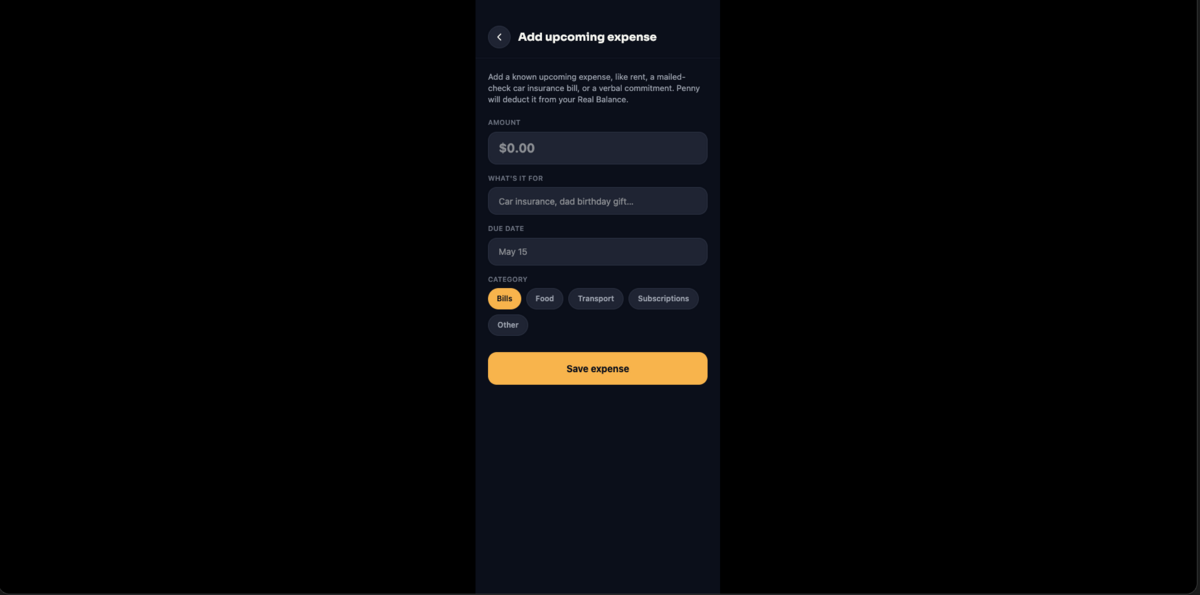
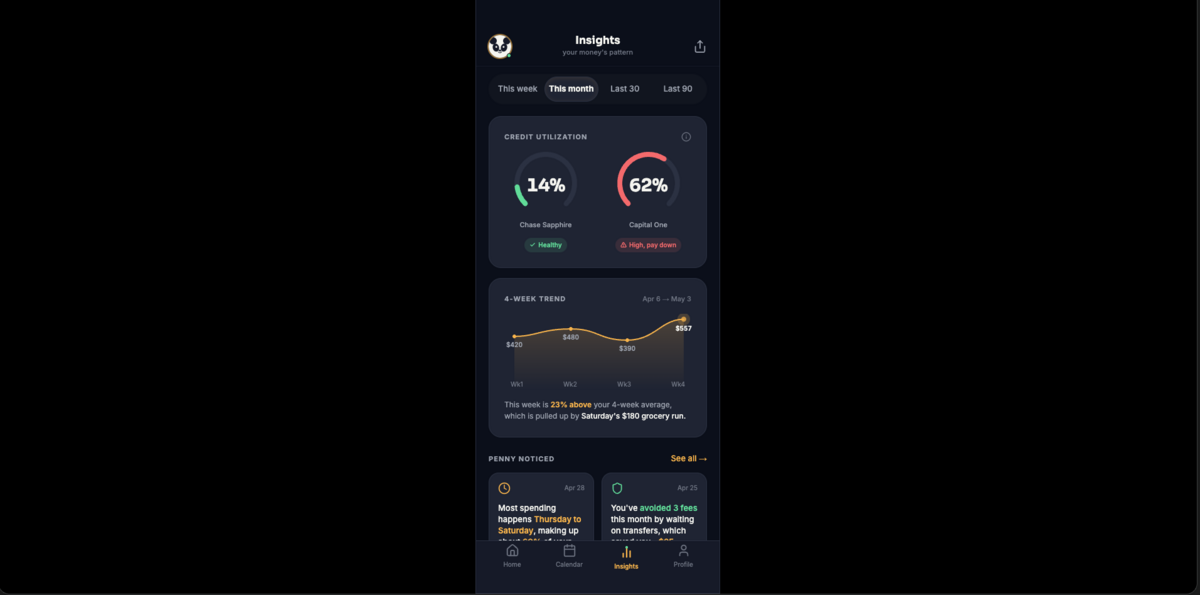
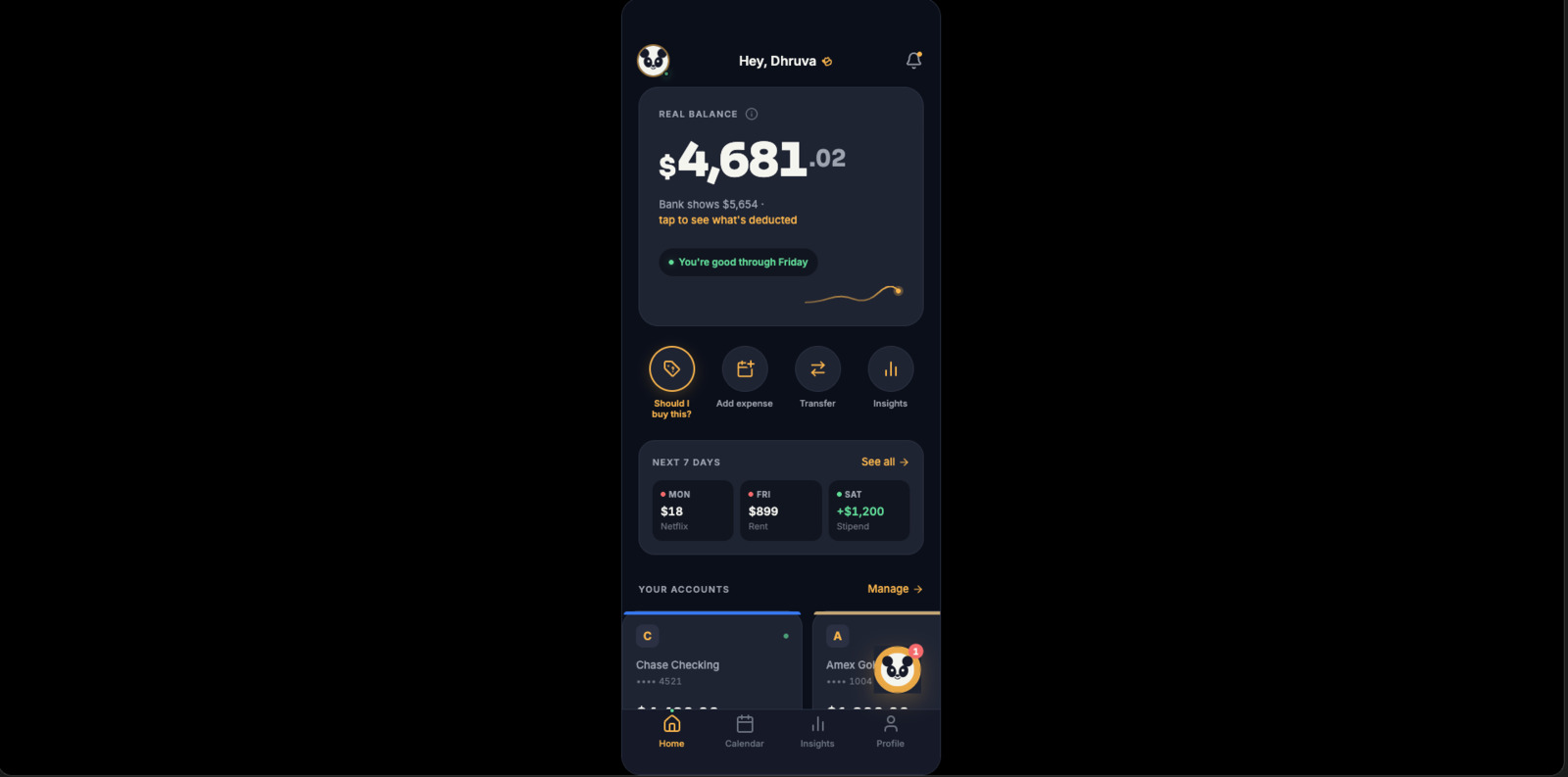
Prototype concepts included Real Balance, fee forecasting, conversational decision support, and a survival calendar.
Artifacts
From evidence to interface.